A complete rebuild.
V1 had eight scenes across multiple locations. Users could not follow it. They focused on completing tasks rather than feeling anything. We did not patch it. We rebuilt it from the ground up.
Eight scenes. Multiple locations. No narrative thread.
Users were completing tasks to advance rather than engaging with the story. The fire station scene was not recognizable. The flashback felt like showing trauma rather than understanding it. The cup metaphor added complexity without clarity.
BeforeOne home. One evening. Every object carries meaning.
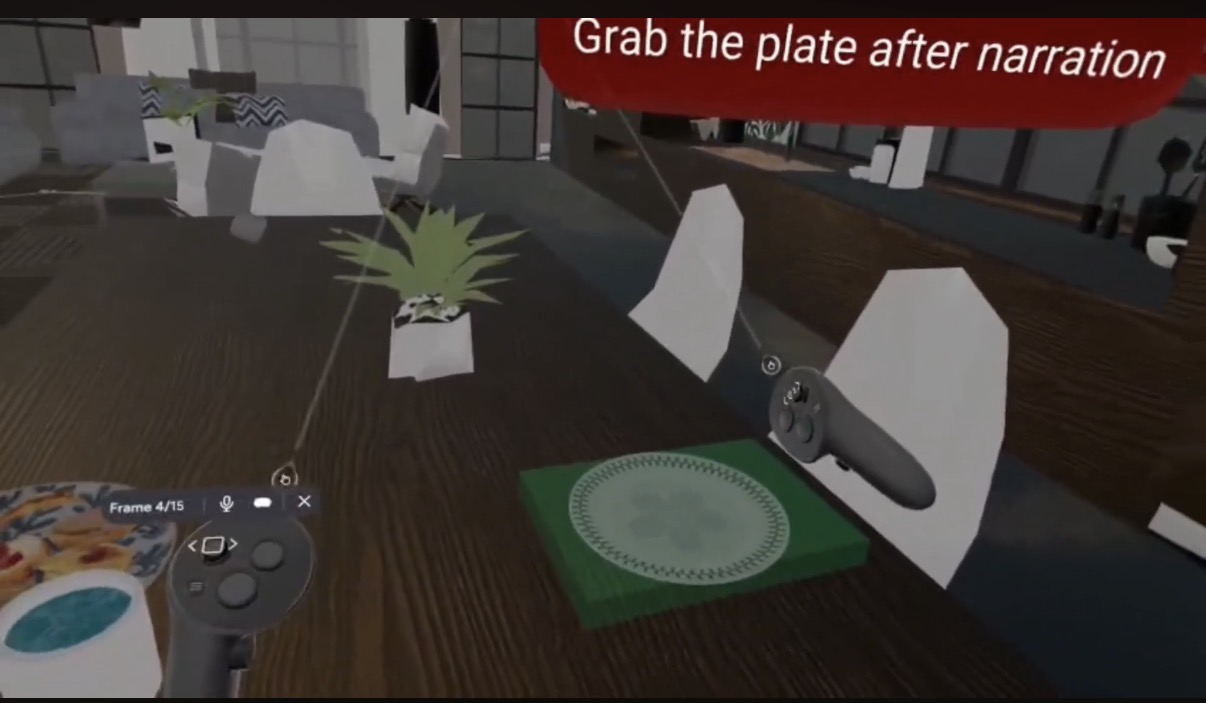
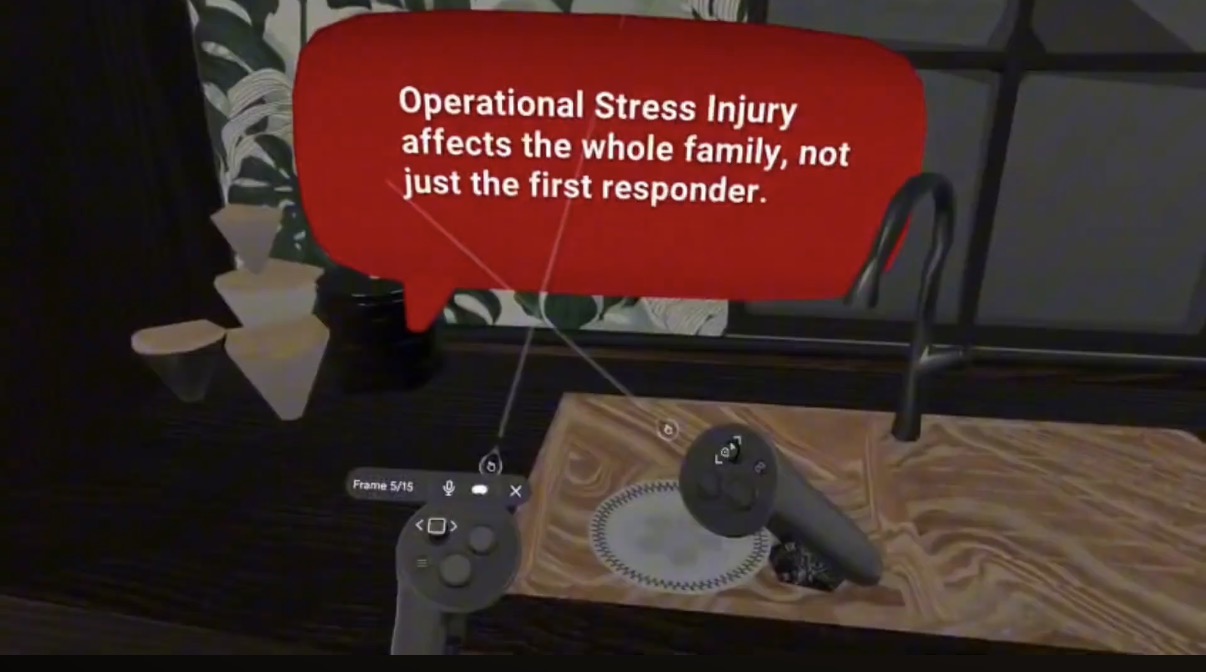
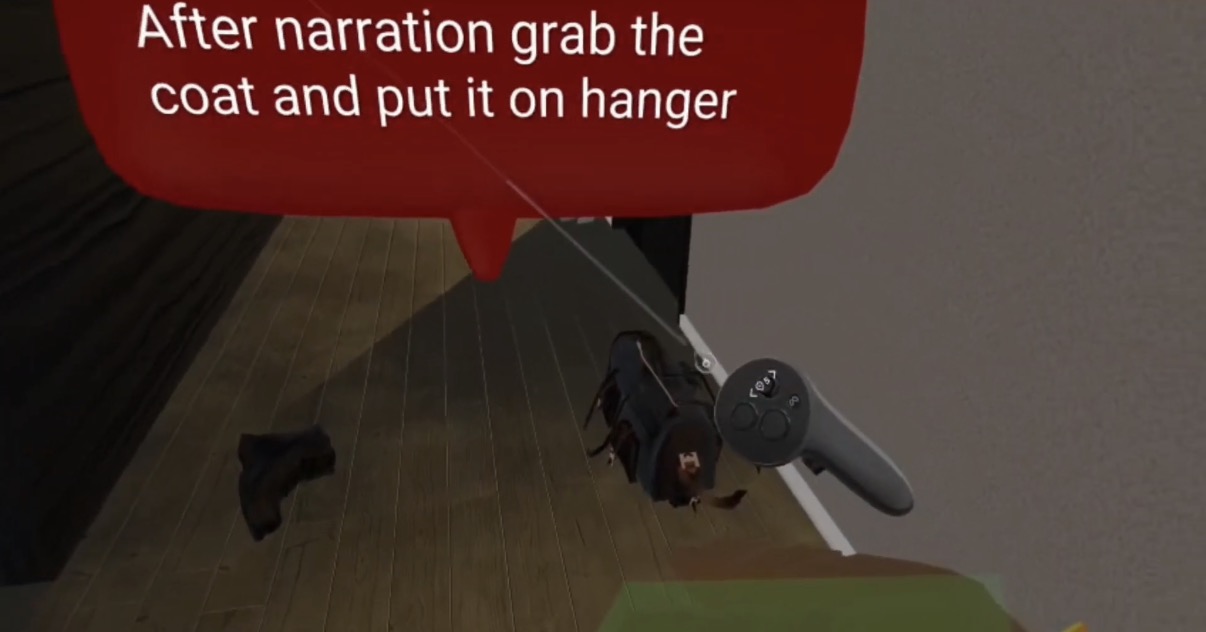
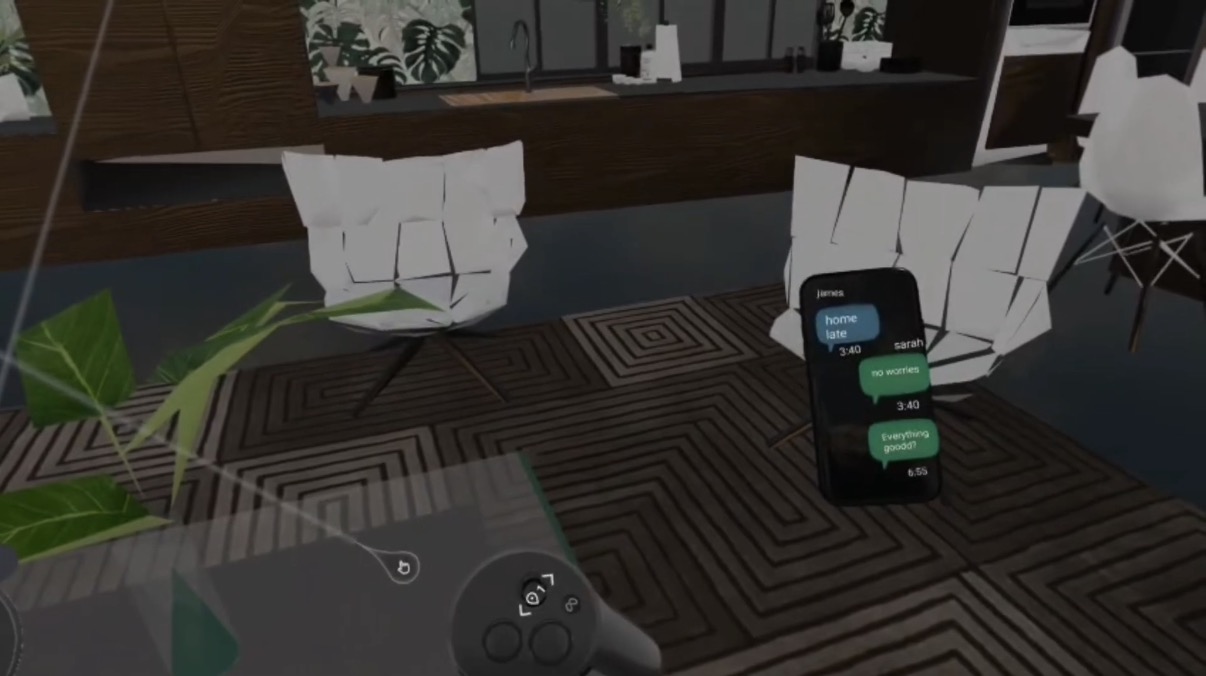
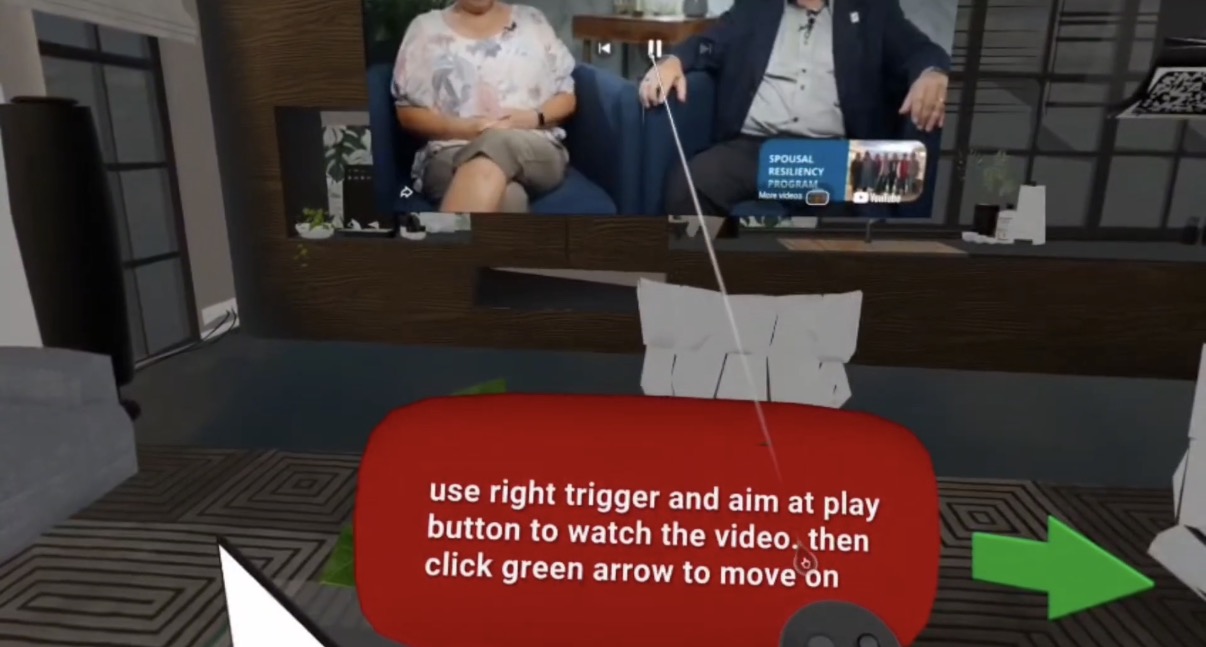
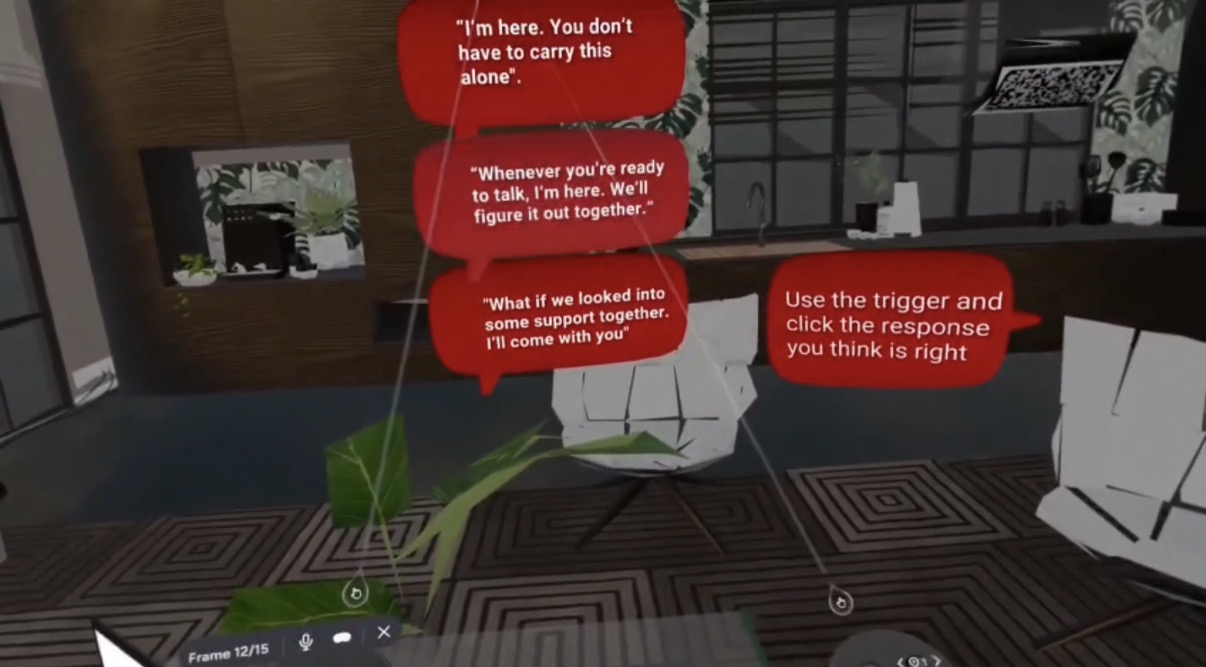
We collapsed everything into a single home that evolves through frame transitions. A full narrator speaks to the user as Sarah throughout. Every interaction is tied to the narrative: putting a coat away, clearing a cold plate, reading an unopened message.
AfterUncanny valley breaks immersion before it begins.
Through our course and instructor feedback we learned that character models in VR risk creating an uncanny valley effect where almost human is not quite human enough, which pulls users out of the experience. We let voice, objects, and spatial audio do the work instead.
Design DecisionReal input from a 911 Operator and active firefighters.
Our 911 Operator said the flashback would be giving them trauma too. Firefighters on Reddit confirmed the toll is accumulation over years, not one dramatic call. Every major design change traces back to a real person's real words.
User Research